Travel Trade and Distribution: Who’s Driving This in Your Organisation?
When I look across the visitor economy, one thing strikes me. The live entertainment sector has reseller business nailed. It is a core revenue channel, fully embedded into their commercial strategy. Leisure, tours, and activity operators also recognise the value of online travel organisations (OTAs) like Pitch Up or Booking.com, prioritising those relationships and investing in technology to underpin the transactions. They know the power of marketing presence at scale.
So why is it that so many visitor attractions still lag behind?
Of course, this isn’t true of everyone. Attractions that consistently exhibit at World Travel Market, invest in group travel shows, and are actively involved in associations like UKInbound understand how vital it is to showcase their offer to the coach, group travel and Free Independent Traveller (FIT) market. Yet, when you look at the technology and commercial mindset surrounding distribution, there are still significant gaps in awareness, ownership, and strategy.
Common Barriers to Travel Trade in Visitor Attractions
I often hear:
“We don’t want to impact ticket prices with high commissions.”
“We don’t need more visitors at peak times.”
“Our customers don’t use those channels to book.”
Each of these misses the point. Travel trade and reseller channels are not about cannibalising existing peak demand. They’re about filling the gaps. If you’re full at certain times, are your opening hours right? Have you considered packaging trade offers for off-peak slots when you’re not full? Have you explored how your ticketing/booking/reservation provider can help you automate and reconcile trade bookings so that the process is less resource-intensive?
And when it comes to commission rates, if your marketing budget can’t compete with the global spend of the OTAs (and let’s be honest, whose can?) then why resist? Their reach is wider than you could ever afford, and if the customer books direct instead, you haven’t lost anything.
Why Travel Trade is More Than OTAs
Too often, many people think of travel trade in today’s terms as just Booking.com, Expedia, or TripAdvisor Experiences. Yet trade is far more granular than that. If you look at the giants of the industry like Merlin Entertainments, they have entire divisions dedicated to trade and resellers, covering every possible nuance, from group operators to hotels, coach companies, tour operators, DMOs and beyond. In the projects ReWork have supported Merlin, I was surprised and delighted with how seriously they take this area of their business.
Yes, Merlin has the scale and resources to dedicate whole teams to this, but the principle still applies. When I worked in venues, there wasn’t a dedicated trade function, yet trade relationships were still built into the growth strategy. Building those relationships often came down to human skills: networking, negotiation, picking up the phone, and building trust over time. Which raises an important question: are we equipping the next generation of professionals with the skills to excel in this area, or is it being overlooked in favour of purely digital expertise?
The Skills Gap in Travel Trade Marketing
A marketing leader with over 25 years of experience recently told me she believes many in the sector lack education and awareness about trade. That too many new entrants into marketing roles are focused on digital and social channels, without the skills or knowledge to develop relationships that can be just as powerful for long-term growth.
Trade relies on human-to-human interaction: the ability to build trust, negotiate, and maintain relationships with partners over time. These are skills that take practice, mentorship, and training. If our future marketing and sales leaders aren’t supported to develop them, then the sector risks weakening one of its most effective distribution routes. Perhaps that’s why travel trade often falls into the gap between departments, never fully owned or given the weight it deserves.
Who Owns Travel Trade in Your Organisation?
For many attractions, this comes down to a lack of accountability. Who owns the travel trade in your business? Does it have KPIs? Is there a strategy, with clear targets and resources? Too often, responsibility sits in limbo, with marketing focuses on digital and social, sales focus elsewhere, and travel trade falls through the cracks.
When I spoke at The Attractions Marketing Conference last year, a respected trade marketing professional told me I was the only speaker to mention travel trade all day. What does that say about where this sits in the sector’s priorities?
Examples of Travel Trade in Action
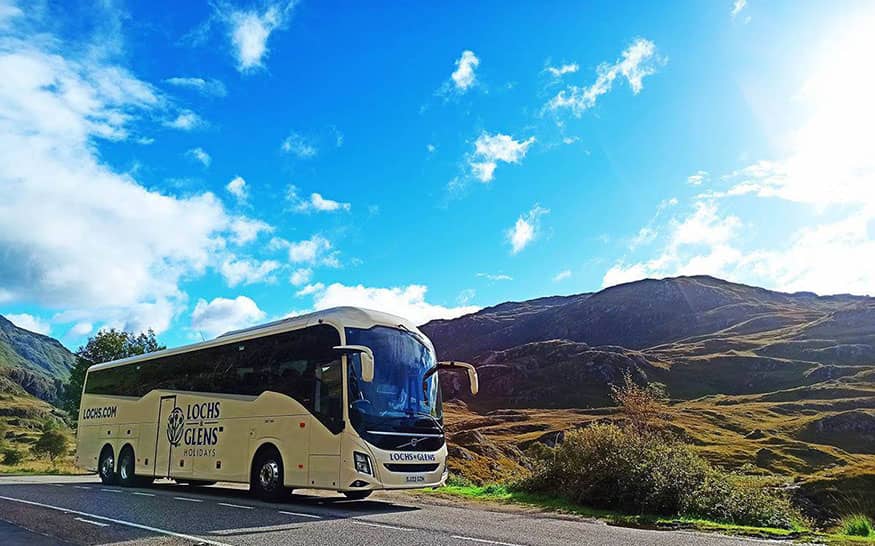
We don’t need to look far for inspiration. My mum recently took a coach holiday to Scotland with Lochs & Glens. Multiple attractions, all booked and paid in advance, likely at discounted trade rates. Those attractions didn’t need to market directly to her; their partners did it for them. The only question is: how easy did those attractions make it for the coach operator to book and reconcile those visits?
Organisations like UKinbound, VisitBritain, and regional Local Visitor Economy Partnerships (LVEPs) (previously named DMOs) exist to drive inbound growth and connect attractions with the broader travel ecosystem. With the recent news of Visit Cornwall going into liquidation and Visit Kent into receivership, it’s starting to leave a vital gap that needs filling with some urgency. Coach companies, hotels, online travel agents, and specialist tour operators are all part of this ecosystem. They already have the audiences; the question is whether you’re making your attraction part of the journey.
Live entertainment doesn’t ask whether they should work with resellers; it’s non-negotiable. OTAs are central to the tours and activities sector. So why do so many attractions still hesitate?
Reframing the Role of Travel Trade for Growth
If your business is struggling with visitor numbers, revenue, or seasonality, this might be the question worth asking: where are you looking?
Travel trade, OTAs, local coach operators, hotels, ticket resellers and destination marketing partners can all extend your reach to audiences you may never reach alone. The technology is already there to help. The question is whether your business is set up to take advantage of it, and who in your team is accountable for making it happen.
If trade and distribution are left as an afterthought, you’re not just leaving money on the table; you’re closing the door on markets that others are more than willing to serve. Perhaps it’s time we asked ourselves: are we treating travel trade as a legacy channel, when in reality it could be one of the most forward-looking levers we have for growth?